
Restoration of a Historic B Listed Villa
in a Conservation Area, Bridge of Allan, Stirlingshire.
This project was a full restoration of a B Listed Villa within the Upper Town Conservation Area in Bridge of Allan.
The villa dates from 1907 and was designed by prominent Scottish architect William Leiper.
The building had been designed as a private residence but had been used latterly as a school. The building was in a significant state of disrepair and required a full restoration.
Given the historic significance of the building the project required a substantial amount of coordination with the local authority conservation team and significant specialist knowledge to ensure the fabric repairs and restoration were in keeping with the existing building.
Our client had a lot of experience redeveloping properties and was very aware of what would be involved to bring this building back to life and was committed to following this through. This resulted in a very successful outcome and a building restored back to it’s former glory.
Project Status - Complete
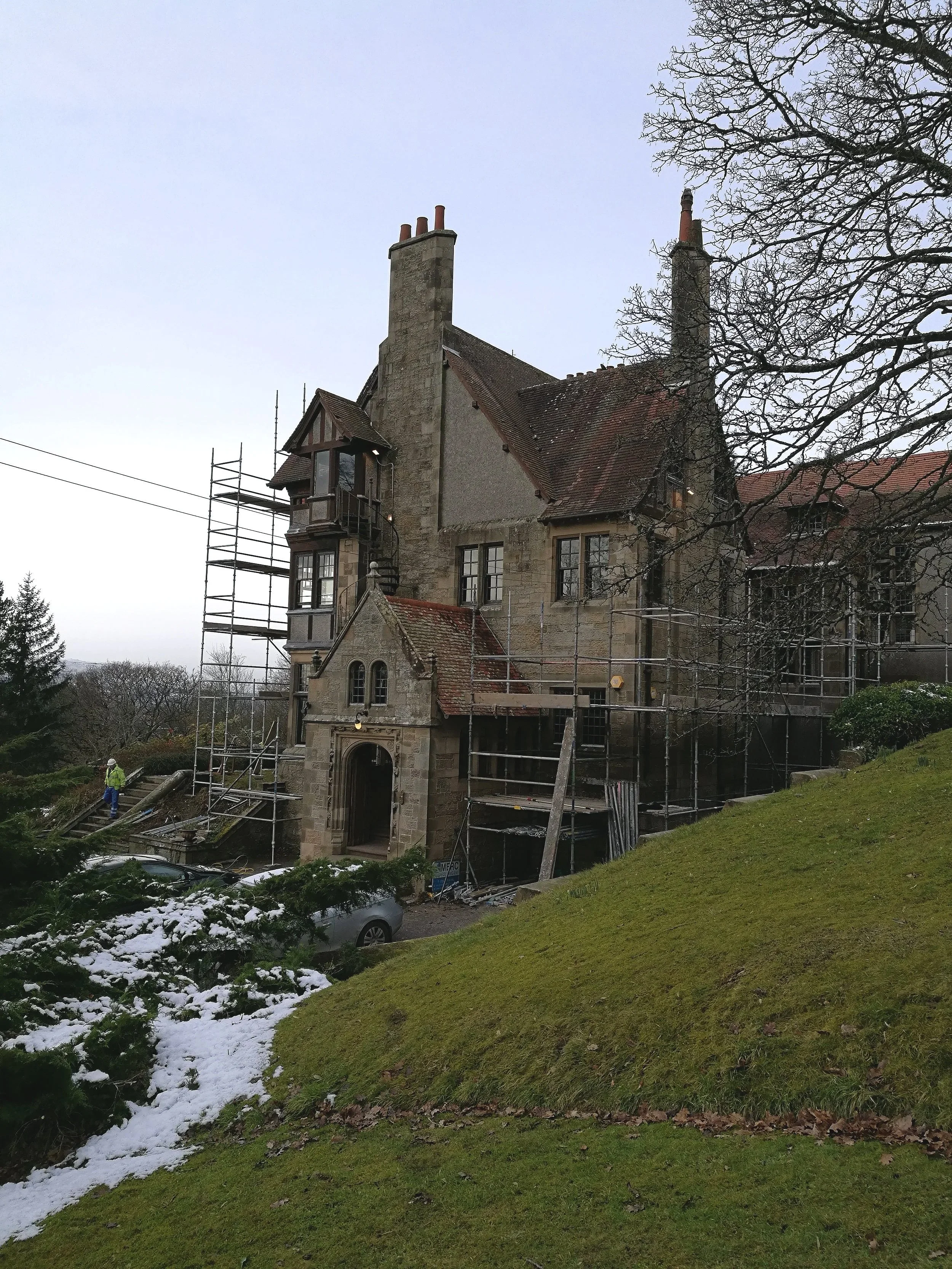
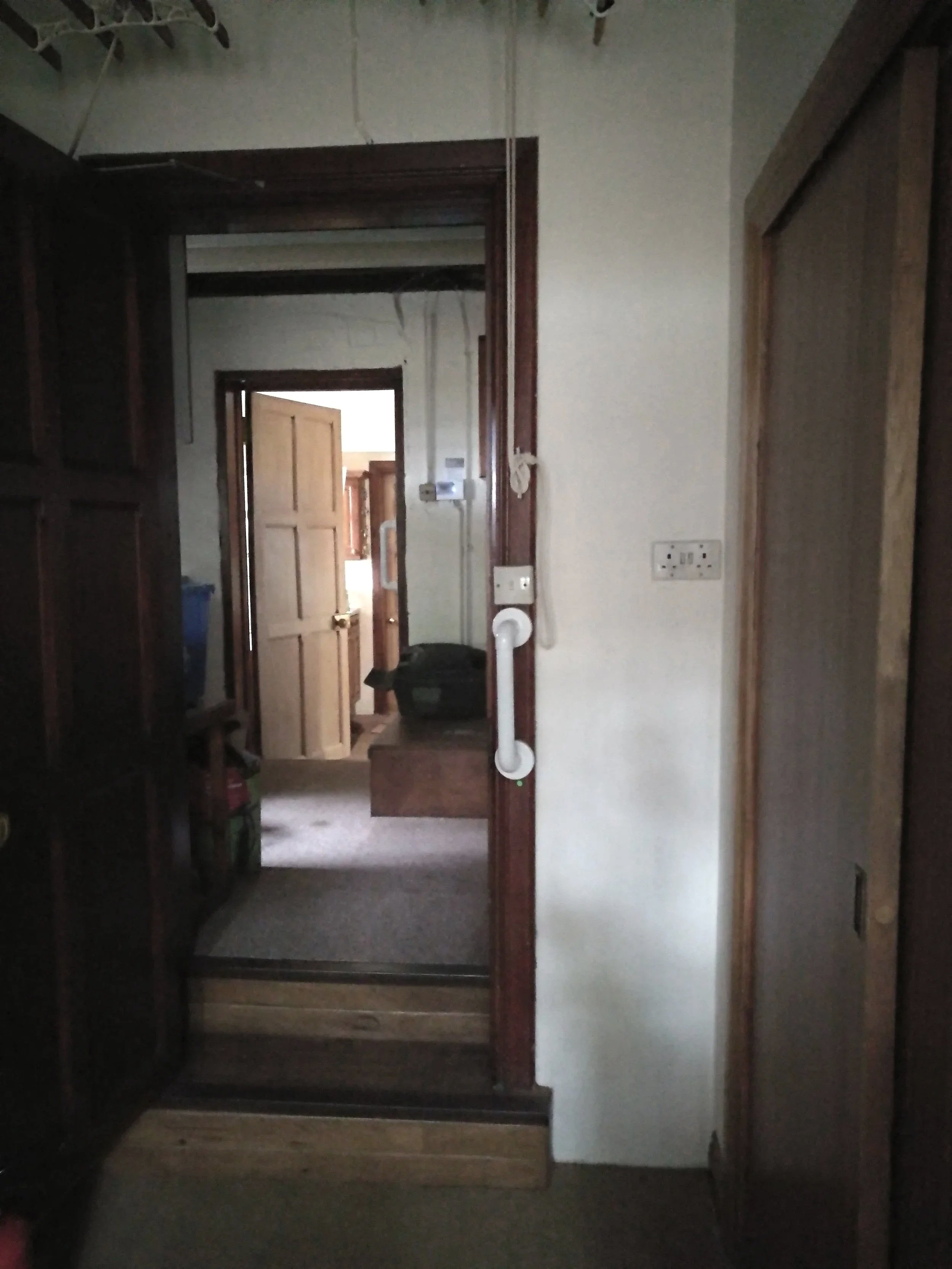
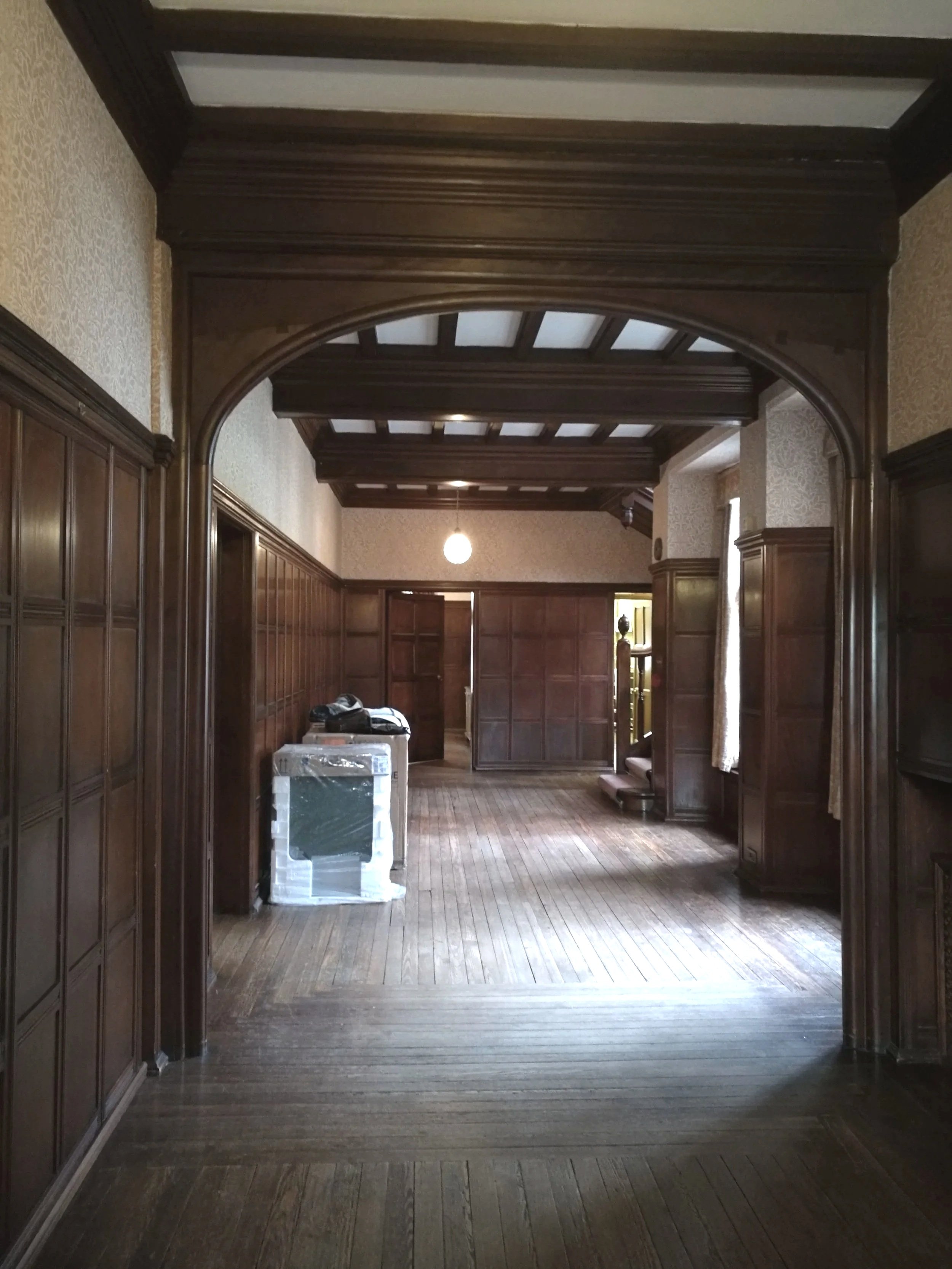
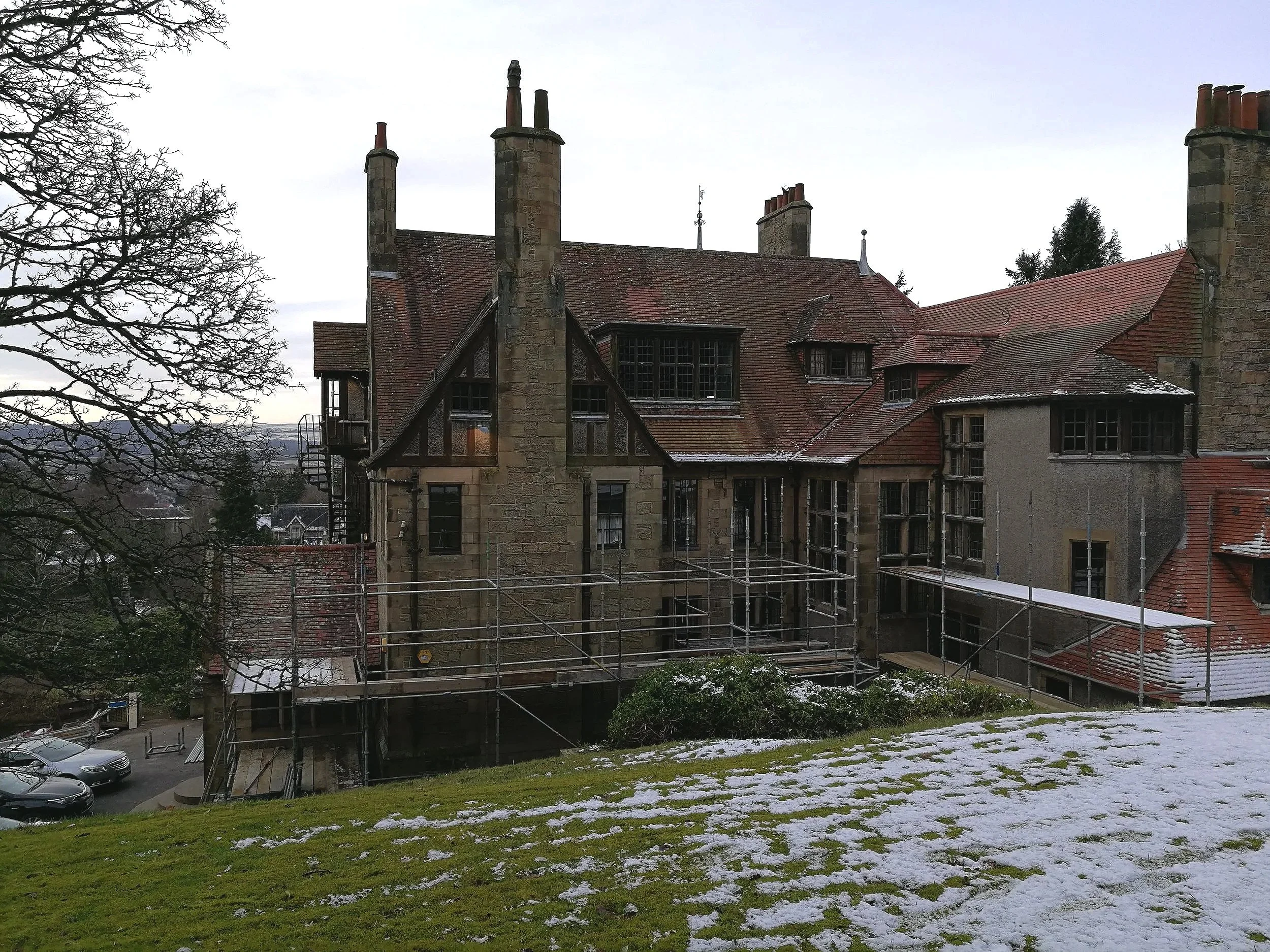
Existing house prior to restoration.
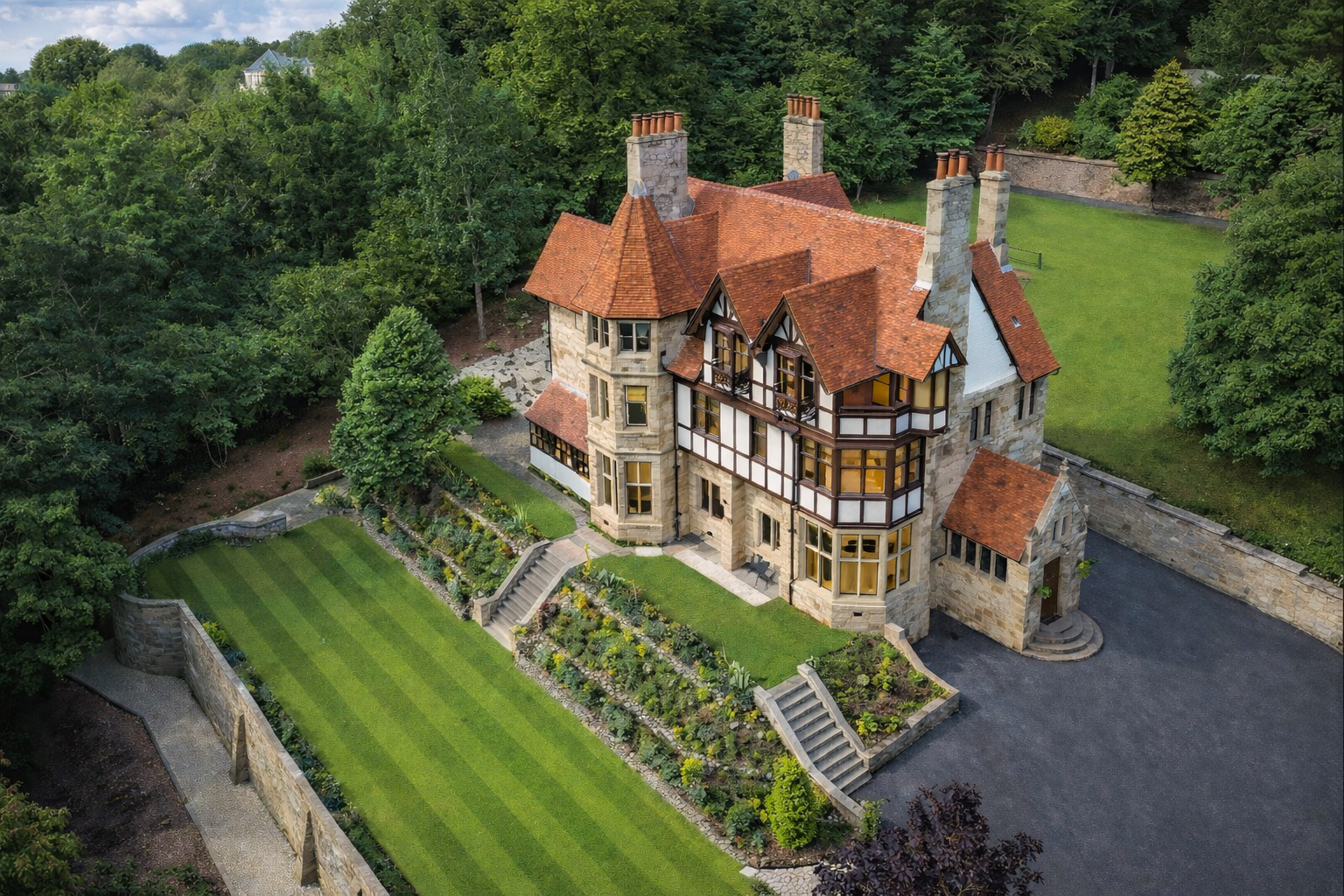
These photos illustrate the transformation both inside and out.
Externally the building fabric was repaired or renewed using materials and workmanship in keeping with the period of the building.
The vibrant exterior of the restored building illustrates how badly neglected the house had become.
Internally, most of the period features such as the extensive panelling, staircases and fireplaces were retained and refurbished.
New additions such a modern kitchen were introduced sympathetically along with new furniture in keeping with the period of the building and the scale of the rooms.